The Aging Voice Is Often Treatable
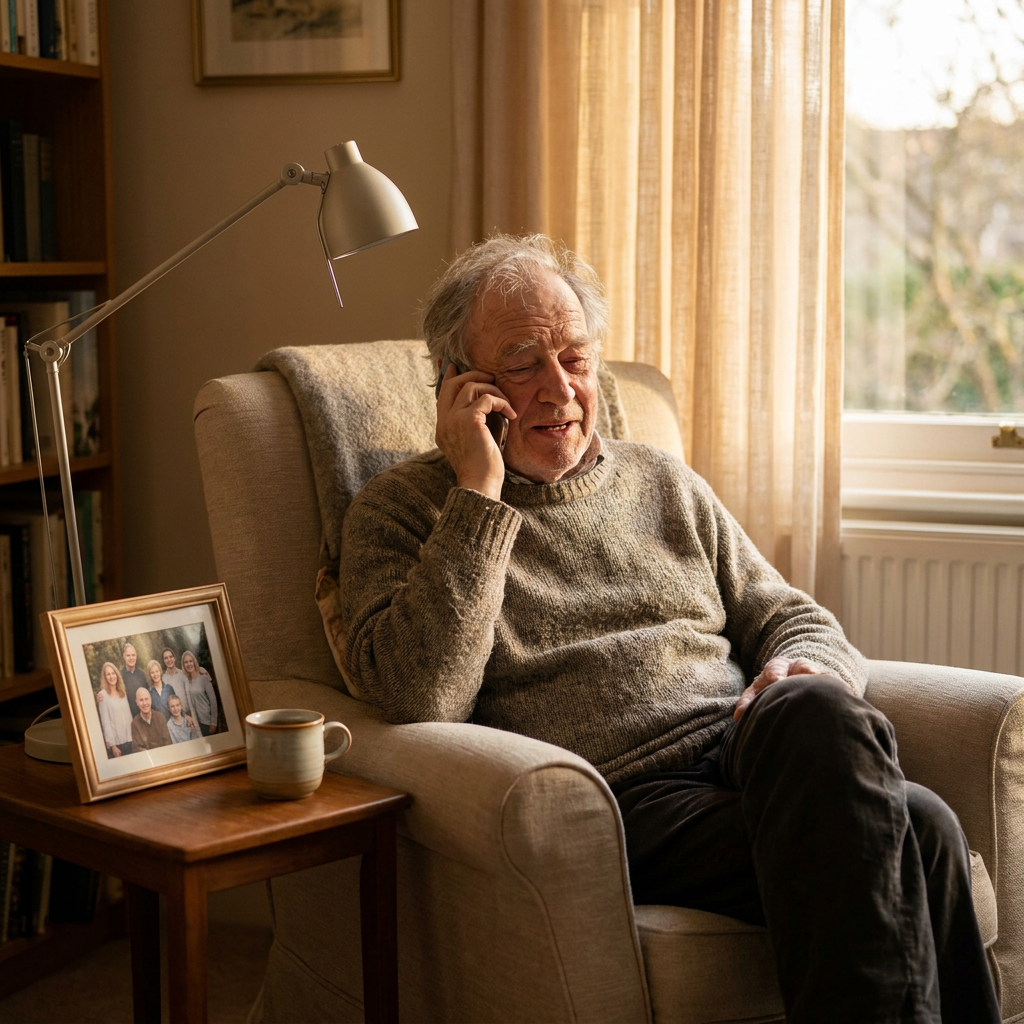
Most families assume an older parent’s “weak, raspy voice” is just something they have to live with. The surprising part: it’s often treatable.
It can start subtly. Calls get shorter, not because there’s less to say, but because they tire out mid-sentence. They repeat themselves, clear their throat, then say, “It’s nothing.” It feels easy to chalk it up to age and move on to the next thing.
🧠 A 2024 systematic review in the Journal of Voice looked at speech-language pathology treatments for presbyphonia (age-related voice changes). Across 23 studies and 1,050 older adults (average age 72.5), voice therapy significantly improved how people felt about their own voice, with a strong effect size (standard mean difference 0.93). It also increased maximum phonation time by an average of 5.37 seconds. Small on paper, big in real life. It can mean finishing a thought, staying in the conversation, and feeling less shut out.
For adult children juggling work, kids, and caregiving, that hits a nerve. The worry about isolation. The guilt about not calling enough. Sometimes the barrier isn’t love. Talking has just gotten harder for them.
If a parent’s voice has gotten quieter or more strained, it may be worth asking their doctor about a speech-language pathologist. There’s no failing here. There’s just a lot to carry.
This is exactly why Eleanor AI exists. A voice-first companion that gives seniors daily conversation to keep them engaged and connected, especially on the days when family can’t be there.
💬 Does this sound familiar? 📌 Save this for a family member who might need it. 💜 Share it with someone carrying a lot.
Source: “A Systematic Review of Speech-Language Pathology Interventions for Presbyphonia Using the Rehabilitation Treatment Specification System.” Journal of Voice, 2024.