The Kind of Connection Even Devoted Family Can’t Replace
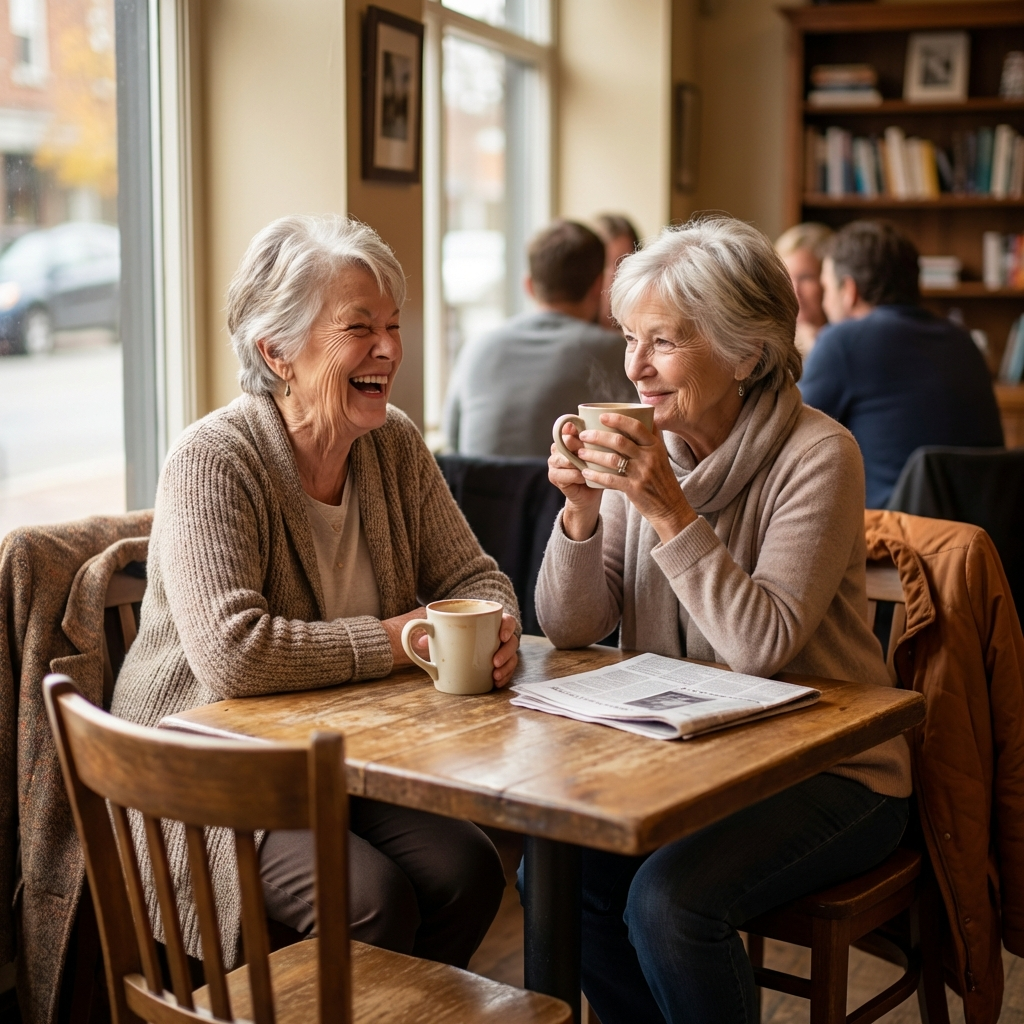
Most families assume that being the primary contact for an aging parent is enough. Call often, visit when possible, check in. But new research suggests something surprising: friend time may be one of the most protective habits for older adults, and it’s not something adult children can substitute for.
🧠 A study in the Journal of Korean Medical Science, drawing on the Korean Frailty and Aging Cohort of roughly 1,200 adults ages 70 to 84, found that seniors who contacted friends only monthly had about twice the odds of being pre-frail and roughly five times the odds of being frail compared to those in daily contact with friends. Family closeness mattered, but peer friendships carried a distinct protective weight of their own.
That finding reframes a common worry. When a parent seems quieter, slower, more withdrawn, the instinct is to add more calls from the family side. But the research points elsewhere: toward the old coworker, the neighbor, the church friend, the walking partner. Those connections aren’t extras. They’re part of how aging bodies and minds stay resilient.
If guilt is creeping in, it helps to set it down. This isn’t about doing more. It’s about widening the lens from “Did I call this week?” to “Does Mom or Dad have a friend touchpoint this week?” Sometimes the most helpful thing is making space for someone else to show up.
📌 Eleanor, Kychee’s voice-first companion for seniors, was built for exactly these in-between moments, offering daily conversation and gentle engagement when people can’t always be there.
Source: Jung HW, et al. “The Association between Frequency of Social Contact and Frailty in Older People: Korean Frailty and Aging Cohort Study (KFACS).” Journal of Korean Medical Science, 2018.