Loneliness Doesn’t Just Feel Bad. It May Be Accelerating Cognitive Decline.
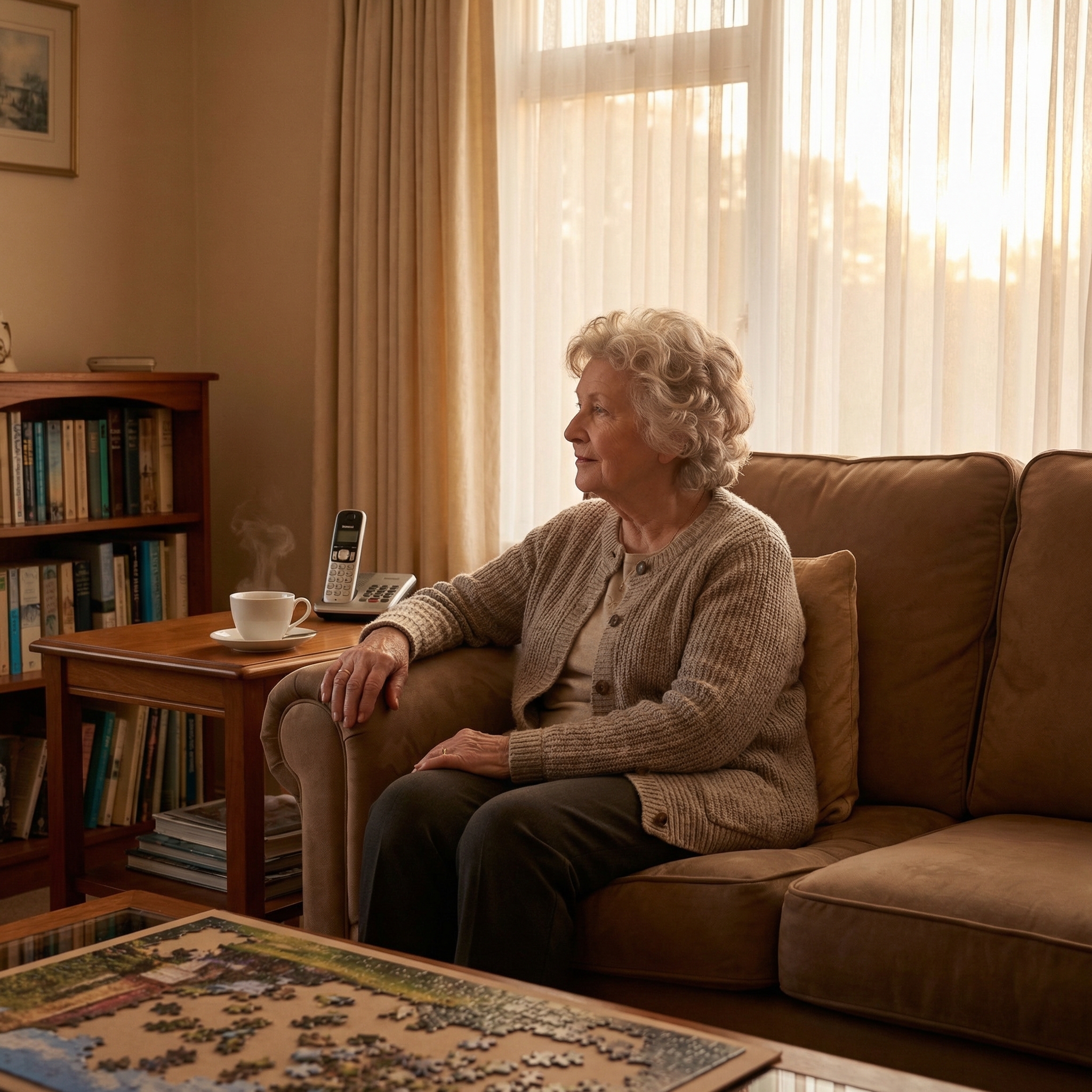
We often assume memory slips are “just age.” But research suggests loneliness may be speeding things up.
There’s a pattern many families recognize: after a stretch of quiet days at home with few visitors and fewer conversations, an older parent seems a little foggier on the phone. A repeated story. A lost train of thought. Laughed off, because it’s easier than sitting with the worry.
🧠 A 2023 systematic review and meta-analysis in Frontiers in Public Health (Yuan et al.) looked at older adults during COVID-era isolation. The results were striking. About 53.96% of older adults with dementia experienced worsening cognitive impairment during periods of isolation. Even among healthy older adults, 24.07% reported subjective cognitive decline.
This isn’t about blame. It’s about how sensitive the aging brain can be to fewer conversations, fewer check-ins, fewer small moments of human connection. For adult children juggling work and family, that “I should call more” feeling is real, and so is the gap between intention and action.
💬 Does this resonate? What patterns have you noticed with your parent?
💜 If you’re doing your best in the margins of a busy life, that already matters. Share this with someone who might need to hear it.
📌 Bookmark this for a conversation with your siblings or your parent’s care team. This is exactly why we built Eleanor, a voice-first companion that offers daily conversation and cognitive engagement for older adults.
Source: Yuan Y, et al. “The impact of social isolation from COVID-19-related public health measures on cognitive function and mental health among older adults: A systematic review and meta-analysis.” Frontiers in Public Health, 2023.